
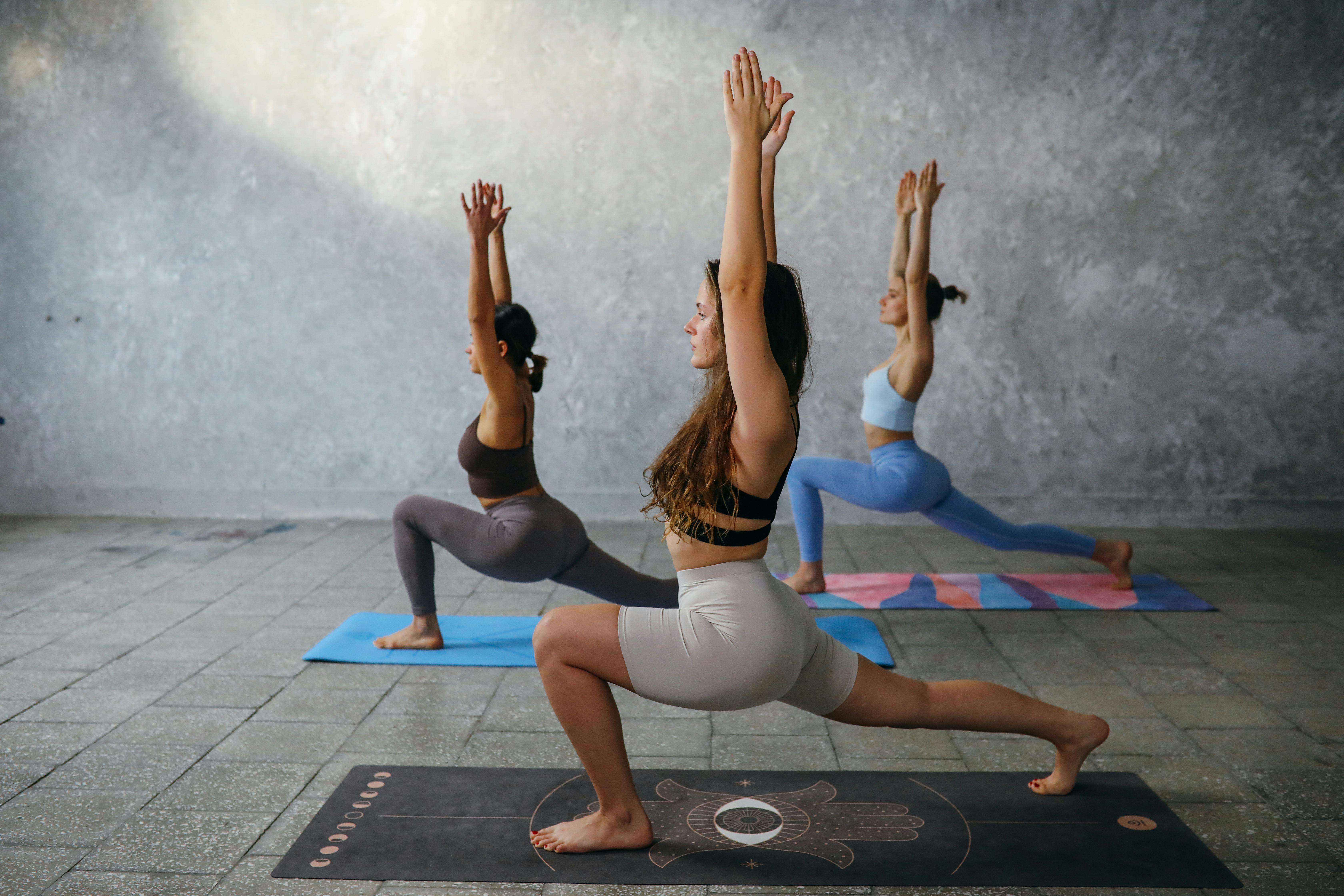
The year is 2026, and the ancient art of yoga has met its most transformative ally yet: artificial intelligence and smart technology. Dive into our comprehensive guide to the leading AI-powered yoga platforms and intelligent mats that are personalizing practices, preventing injuries, and deepening the mind-body connection. Discover which cutting-edge tech is right for you, compare features, and make an informed purchasing decision to revolutionize your home yoga journey and elevate your wellness in the digital age.
Introduction to the Topic
For millennia, yoga has been a beacon of holistic well-being, a journey of self-discovery through movement, breath, and mindfulness. Yet, even in its most traditional forms, the pursuit of perfect alignment, personalized sequences, and consistent progress often relied heavily on access to expert instructors or deep personal discipline. Fast forward to 2026, and the landscape of yoga is experiencing its most profound evolution yet, thanks to the seamless integration of artificial intelligence and smart technology. We're not just talking about online classes anymore; we're talking about intelligent systems that learn your body, adapt to your needs, and guide you with unprecedented precision.
Welcome to the era of AI Yoga – a movement that promises to democratize access to world-class instruction, hyper-personalize your practice, and make injury prevention a core component of every session. This isn't science fiction; it's the present reality for millions of practitioners worldwide. From smart yoga mats that detect subtle postural imbalances to AI-driven platforms that craft bespoke sequences based on your energy levels and goals, the digital revolution is enhancing the ancient wisdom of yoga in ways we could only dream of a decade ago. If you're looking to deepen your practice, prevent plateaus, or simply explore the cutting edge of wellness technology, then understanding these innovations is your first step towards unlocking your ultimate flow.
Backgrounds & Facts
The journey of yoga into the digital realm began subtly with instructional DVDs and then exploded with online streaming platforms. However, these early digital offerings, while convenient, lacked the critical element of real-time, personalized feedback that a human instructor provides. This gap became increasingly apparent as millions embraced home practice, often leading to form inconsistencies, plateaus, and even injuries due to improper alignment or overexertion. The COVID-19 pandemic further accelerated the demand for robust home fitness solutions, highlighting the need for more interactive and intelligent digital tools.
Enter AI. By 2026, AI has matured significantly, moving beyond simple algorithms to sophisticated machine learning models capable of processing vast amounts of data. In the wellness sector, this translates into AI systems that can analyze body movements via camera feeds or embedded sensors, understand biometric data from wearables, and even interpret verbal cues to gauge a user's mental state. According to a recent report by the Global Wellness Institute, the digital wellness market, particularly AI-driven fitness, is projected to exceed $150 billion by 2027, with yoga technology being a significant growth driver. The average yoga practitioner, now more tech-savvy than ever, is actively seeking solutions that offer more than just content – they demand intelligence, adaptability, and measurable progress.
Key facts driving this trend:
- Personalization Demand: A staggering 78% of fitness enthusiasts in 2025 expressed a desire for highly personalized workout plans that adapt to their real-time performance and mood.
- Injury Prevention: Studies show that over 30% of yoga practitioners experience an injury at some point, often due to incorrect form. AI's ability to provide immediate feedback is drastically reducing this risk.
- Accessibility: AI yoga platforms break down geographical and financial barriers, making expert-level guidance accessible to anyone, anywhere, at any time.
- Data-Driven Progress: Modern AI tools offer granular insights into flexibility, strength, balance, and even breath patterns, allowing users to track progress with unprecedented accuracy.
This convergence of ancient practice and futuristic tech is not just a passing fad; it's a fundamental shift in how we approach self-care and physical mastery.
Expert Opinion / Analysis
To truly understand the impact of AI in yoga, we consulted with Dr. Anya Sharma, a leading AI Ethicist and Bio-Wellness Integrator at the prestigious BioFlow Wellness Institute, and Master Yogi Kaelen Reed, founder of 'Ancient Future Yoga' studios, renowned for their blend of traditional teachings with modern innovation.
"The beauty of AI in yoga lies in its capacity for hyper-personalization," explains Dr. Sharma. "No two bodies are exactly alike, and traditional group classes, while valuable for community, often struggle to address individual biomechanical nuances. AI, utilizing advanced computer vision and sensor technology, can analyze your unique skeletal structure, muscle imbalances, and movement patterns in real-time. It's like having a dedicated personal yoga therapist in your living room, constantly adjusting, correcting, and encouraging you towards optimal alignment and depth without judgment." Dr. Sharma emphasizes the ethical considerations, noting that reputable platforms prioritize data privacy and user control over their biometric information.
Master Yogi Kaelen Reed offers a more philosophical perspective: "For centuries, yoga was passed down through direct lineage, a deep connection between guru and student. While AI can never replace the spiritual depth of a human teacher, it acts as an incredible tool to enhance the physical and even mental aspects of practice. Imagine a beginner receiving instant, gentle corrections on Warrior II, preventing strain and building confidence from day one. Or an advanced practitioner exploring complex inversions with a virtual spotter ensuring safety and offering precise micro-adjustments. This technology doesn't dilute the practice; it refines it, making it safer, more accessible, and profoundly more effective for a broader audience." Reed also highlights the potential for AI to introduce practitioners to a wider range of styles and poses, expanding their horizons beyond what might be available locally.
Both experts agree that the synergy between human wisdom and artificial intelligence is key. AI handles the data, the precision, and the adaptation, freeing the practitioner to focus more deeply on the internal experience, the breath, and the mindfulness aspect of yoga. It's a powerful partnership, enabling a yoga journey that is both deeply personal and globally connected.
💰 Best Options in Comparison (VERY IMPORTANT)
With the market booming, choosing the right AI yoga platform or smart mat can feel overwhelming. To help you make the best investment in your wellness, we've meticulously reviewed the top contenders in 2026, focusing on features, user experience, and value for money. Here are our top picks, designed to cater to various needs and budgets:
Top AI Yoga Platforms:
- AuraFlow AI: The Hyper-Personalized Guru
AuraFlow AI sets the gold standard for adaptive yoga. Utilizing advanced 3D body tracking via your device's camera, it provides real-time posture correction, identifies areas of tightness or weakness, and dynamically adjusts sequences to match your daily energy levels and long-term goals. Its proprietary 'FlowState' algorithm learns from your progress, offering predictive analytics to prevent plateaus and suggest targeted poses for specific benefits (e.g., better sleep, stress reduction). Integrates seamlessly with most wearables for heart rate and stress monitoring. - ZenithSync: Holistic Mind-Body Integration
Beyond just physical poses, ZenithSync offers a comprehensive wellness ecosystem. Its AI-driven modules include personalized yoga flows, guided meditation journeys tailored to your current mental state, and even AI-curated breathwork practices. ZenithSync excels in its ability to connect physical practice with mental well-being, offering detailed reports on stress reduction and focus improvement. It fosters a strong virtual community, allowing users to participate in AI-moderated group challenges and share progress. - FlexiBot Pro: Precision & Therapeutic Focus
Developed in collaboration with physiotherapists and sports scientists, FlexiBot Pro is ideal for those with specific therapeutic needs, recovering from injuries, or looking for highly precise biomechanical feedback. Its AI analyzes micro-movements, offering detailed reports on joint stability, muscle engagement, and asymmetry. It can even generate custom sequences designed by AI to target specific areas for rehabilitation or performance enhancement, often used by athletes and those seeking advanced injury prevention.
Top Smart Yoga Mats & Gear:
- EchoMat 3.0: The Intelligent Foundation
The EchoMat 3.0 is a game-changer. Embedded with thousands of pressure and motion sensors, it provides haptic feedback (gentle vibrations) to guide your body into perfect alignment without needing to look at a screen. Its companion app, powered by AI, offers a 'Heatmap' view of your pressure distribution and instantly highlights areas needing adjustment. Durable, portable, and boasting a 12-hour battery life, it's the ultimate smart foundation for any practice. - LumiFlow Pad: Visual Guidance & Portability
For those who prefer visual cues, the LumiFlow Pad features integrated LED lights that illuminate optimal hand and foot placements for various poses. Its AI-powered app suggests sequences based on your skill level and goals, with the lights guiding you through each transition. Lightweight and rollable, it's perfect for travel or small spaces, offering an intuitive and visually engaging practice experience. - PulseBand Yoga: Biometric Harmony Wearable
While not a mat, the PulseBand Yoga is an essential companion for any AI-enhanced practice. This sleek wristband continuously monitors heart rate variability (HRV), skin temperature, and galvanic skin response, feeding real-time biometric data to your chosen AI yoga platform. Its AI then interprets this data to suggest modifications, adjust pacing, or recommend specific breathwork, ensuring your practice is always in tune with your body's physiological state.
To help you compare these fantastic options at a glance, here's our detailed table:
| Product/Service | Key Features | Target User | Price/Model (2026 Est.) | Pros | Cons |
|---|---|---|---|---|---|
| AuraFlow AI (Platform) | 3D body tracking, real-time posture correction, adaptive sequences, predictive analytics, wearable integration. | All levels, tech-savvy practitioners, those seeking deep personalization. | $29.99/month (Premium) | Unmatched personalization, excellent injury prevention, intuitive interface. | Requires good camera setup, higher subscription cost. |
| ZenithSync (Platform) | AI yoga, guided meditation, breathwork, mental well-being reports, community features. | Holistic seekers, those prioritizing mental health, community-focused. | $24.99/month (Premium) | Comprehensive wellness, strong community, great for stress reduction. | Less emphasis on biomechanical detail than AuraFlow. |
| FlexiBot Pro (Platform) | Micro-movement analysis, therapeutic sequences, injury recovery focus, detailed biomechanical reports. | Athletes, injury recovery, physical therapy integration, advanced practitioners. | $34.99/month (Pro) | Superior for injury prevention/recovery, highly precise feedback, expert-backed. | Potentially overwhelming for beginners, higher price point. |
| EchoMat 3.0 (Smart Mat) | Pressure/motion sensors, haptic feedback, 'Heatmap' analysis, 12hr battery. | All levels, those wanting tactile feedback, hands-free guidance. | $499 (One-time purchase) | Direct physical guidance, durable, excellent for alignment correction. | High upfront cost, less portable than basic mats. |
| LumiFlow Pad (Smart Mat) | LED light guidance, pressure zones, portable, app-driven sequences. | Beginners, visual learners, travelers, small space users. | $299 (One-time purchase) | Great visual cues, highly portable, more affordable smart mat. | Less detailed feedback than EchoMat, battery life can vary. |
| PulseBand Yoga (Wearable) | HRV, skin temp, GSR monitoring, real-time biometric feedback to AI platforms. | All practitioners, especially those integrating with AI platforms, stress management. | $149 (One-time purchase) | Deep physiological insights, universal compatibility, lightweight. | Requires separate AI platform, not a standalone solution. |
Outlook & Trends
The innovation in AI yoga and smart wellness tech shows no signs of slowing down. Looking ahead to the late 2020s and early 2030s, we anticipate even more profound integrations and capabilities:
- Seamless VR/AR Integration: Imagine stepping into a truly immersive virtual yoga studio, where AI projects holographic instructors, transports you to serene natural landscapes, and even provides haptic feedback through smart suits for a truly embodied experience. The lines between physical and virtual practice will blur.
- Predictive Wellness & Biofeedback 2.0: Future AI will not only correct your form but also predict potential injuries based on accumulated data and physiological markers, offering preventative exercises before issues arise. Advanced biofeedback will allow AI to guide you into deeper meditative states by directly monitoring brainwave patterns and nervous system activity.
- Hyper-Personalized Ecosystems: Your AI yoga platform will become part of a larger, interconnected wellness ecosystem, sharing data (with your explicit permission) with your smart home, nutritionist, and even your primary care physician. This will enable holistic, AI-driven recommendations for sleep, diet, stress management, and more, all tailored to your unique bio-profile.
- Accessible Therapeutic AI: AI-powered therapeutic yoga will become more sophisticated and widely available, offering specialized programs for chronic pain, neurological conditions, and post-operative recovery, making personalized rehabilitation more accessible and affordable.
The future of yoga is intelligent, adaptive, and deeply personal. It promises to make the profound benefits of this ancient practice more attainable and sustainable for everyone, everywhere.
Conclusion
The year 2026 marks a pivotal moment in the evolution of yoga. The integration of AI and smart technology is not merely a convenience; it's a revolutionary leap forward in how we access, understand, and personalize our practice. From real-time posture correction that safeguards against injury to adaptive sequences that evolve with your body and mind, these innovations are making yoga more effective, engaging, and accessible than ever before.
Whether you're a seasoned yogi looking to refine your alignment, a beginner seeking confident guidance, or someone with specific health goals, there's an AI-powered solution designed for you. Investing in these cutting-edge platforms and smart mats isn't just buying a product; it's investing in a personalized journey towards deeper physical mastery, enhanced mental clarity, and enduring well-being. Explore the options presented in this guide, compare their unique offerings, and choose the technology that best aligns with your aspirations. The future of your flow is here – embrace it, and transform your practice today!