
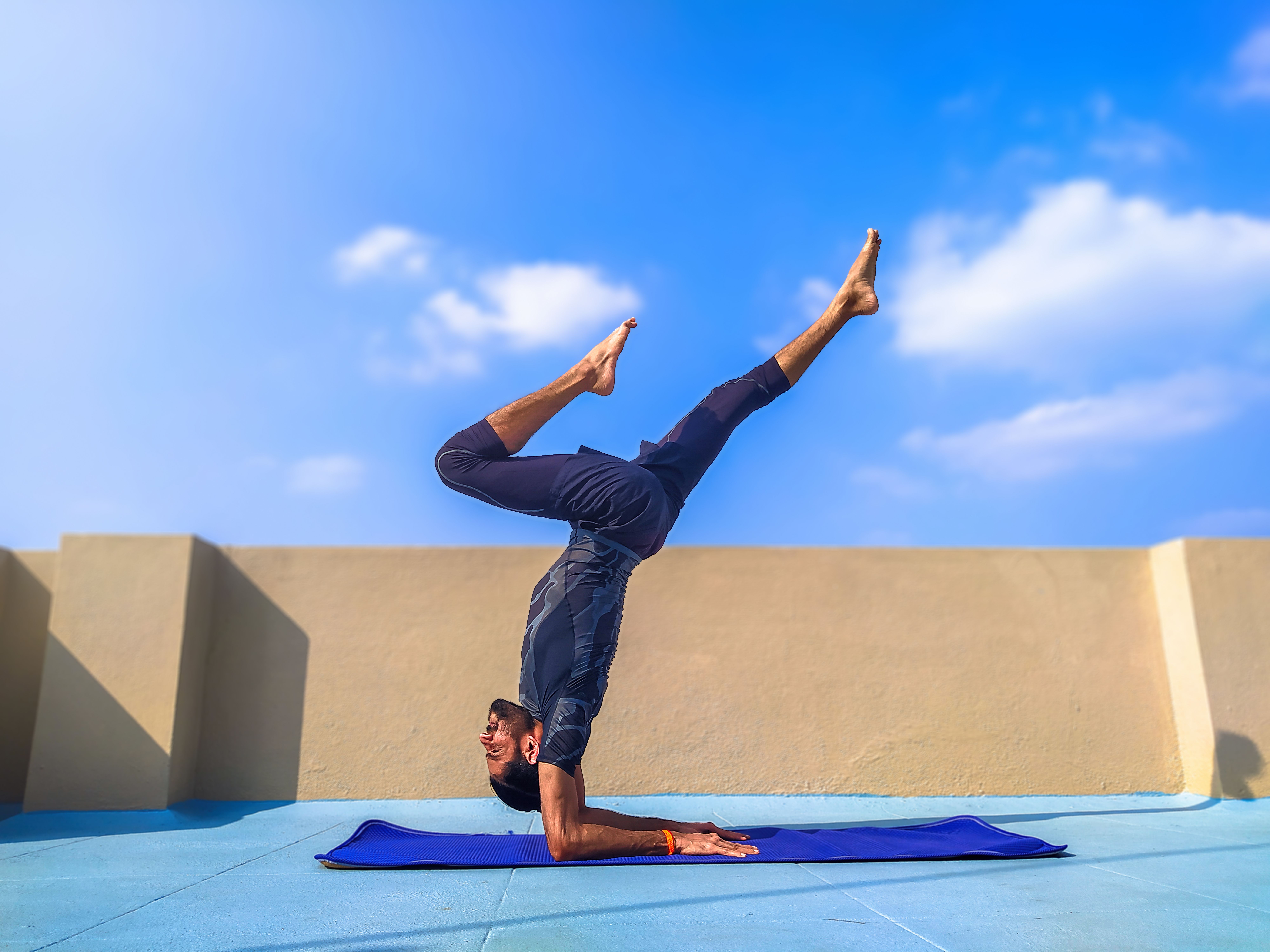
Asana now denotes a physical posture in a class. Its earlier use was narrower, and the way the word broadened tracks the history of the practice itself.
The root sense is sitting
The term derives from a verb meaning to sit, and in early usage it refers to the act of sitting, the manner of sitting, or the object sat upon.
Ritual literature uses it for a seat prepared for a person or an image, and the word appears in contexts with no connection to physical exercise.
That range of meaning persists in ordinary language, where the word can still indicate a seat rather than a posture.
Classical yoga uses it for a stable seat
The classical aphorisms treat asana as one limb among eight and describe it in terms of steadiness and ease rather than shape.
The concern is a position that can be held for a long period without discomfort or fidgeting, which is a requirement for extended sitting practice.
No list of positions accompanies this, and commentators supplying examples generally name seated positions rather than a wide repertoire.
Hatha literature expands the category
Medieval hatha manuals describe a larger set of positions, including some that are clearly not seats, associating them with physical effects and with preparation for other practices.
Even here the numbers are modest by modern standards, and seated positions retain a prominent place within the lists.
The word has begun to shift by this point, covering held positions generally rather than specifically the arrangement of a seat.
Modern usage completes the change
In contemporary practice, asana means posture without qualification, and a class described as asana practice is understood to involve movement through many positions.
The compound names now familiar, formed from a descriptive word plus asana, follow a naming pattern that expanded considerably in the last century.
Many of those names are recent even where the position itself is older, and matching a modern name to a text reference is often unreliable.
The older sense clarifies the instruction
Reading the classical definition with the original meaning in view makes it clear that the requirement is a functional one about steadiness rather than an aesthetic one about form.
That reframes questions about achieving particular shapes, since the stated criterion concerns whether a position can be held comfortably and stably.
It also explains why traditions concerned mainly with seated meditation had little need for an extensive postural repertoire and did not develop one.