
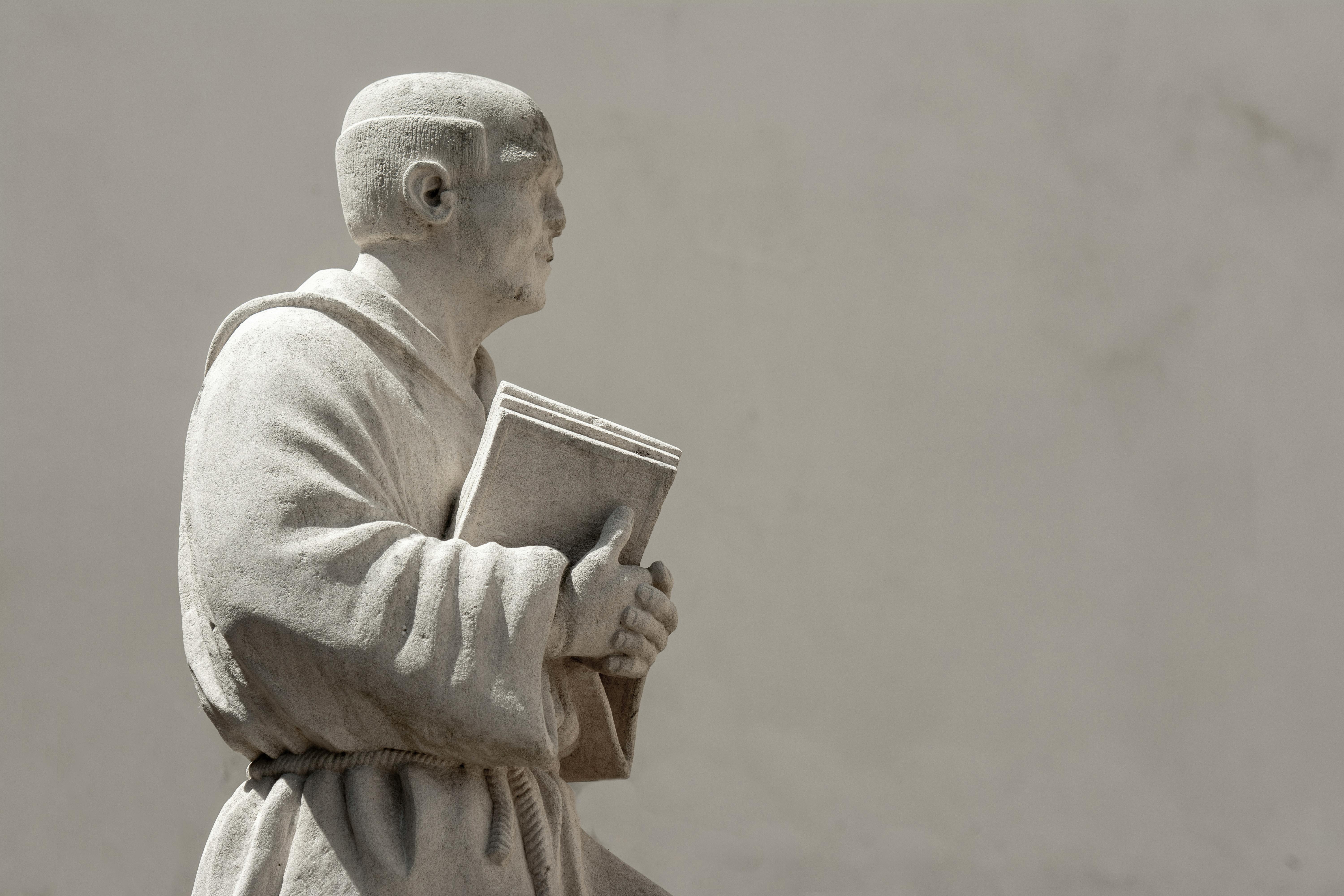
Oral tradition is usually assumed to be unreliable, drifting a little with every retelling until the original is lost. Several ancient traditions instead carried very long texts across centuries with remarkable stability.
Memorisation was a trained profession
Communities that transmitted sacred material orally did not rely on casual recall. Reciters typically began as children and spent years with a teacher whose own accuracy had been tested the same way.
The training was full-time and socially recognised. A reciter held a defined place in the community, and that place depended on producing the text faithfully on demand rather than approximately.
Because the skill was scarce and valued, mistakes carried a real cost. A lapse was heard by other trained reciters and corrected at once instead of being carried quietly forward.
The texts were shaped to resist drift
Much orally transmitted material is metrical. Fixed syllable counts, recurring line lengths and patterned sound mean that a substituted word usually breaks the pattern audibly for anyone listening.
Formulaic phrasing does similar work. Stock epithets and repeated formulas give a reciter predictable ground to stand on, and a deviation stands out against the shape the ear expects.
Where meaning alone would permit many paraphrases, sound narrows the options sharply. The form is not decoration laid over the content; it is part of the error checking.
Vedic recitation added deliberate redundancy
The Vedic tradition developed permutation recitations, in which the words of a passage are chanted in reversed and interlocking orders as well as straight through.
Reciting a text backwards word by word, and in overlapping pairs, means a single displaced word fails in several patterns at once. The error becomes conspicuous rather than invisible.
These methods cost enormous effort and add nothing to the meaning. They exist because the tradition treated the exact wording, including pitch accent, as the thing being preserved.
Group recitation checked individual memory
Texts were commonly recited in company rather than alone. When many voices carry the same line, any divergence is audible to everyone present in the moment it happens.
Fixed occasions added further checking. Festivals and daily observances brought reciters from different teaching lineages into the same room, which exposed local drift that had gone unnoticed at home.
Comparison across lineages mattered most of all. Two chains of transmission that had never influenced one another could be measured directly against each other.
Writing did not simply replace the older method
When manuscripts appeared, many traditions continued to treat the recited version as authoritative and the written copy as a support for memory rather than a replacement.
Copying introduces its own errors, and a scribe's slip propagates silently into every copy made from that manuscript. An oral chain with trained listeners fails differently and more loudly.
Scholars comparing surviving recitation traditions with early manuscripts have generally found close agreement, which is why the oral method is now studied as a transmission technology rather than a curiosity.