
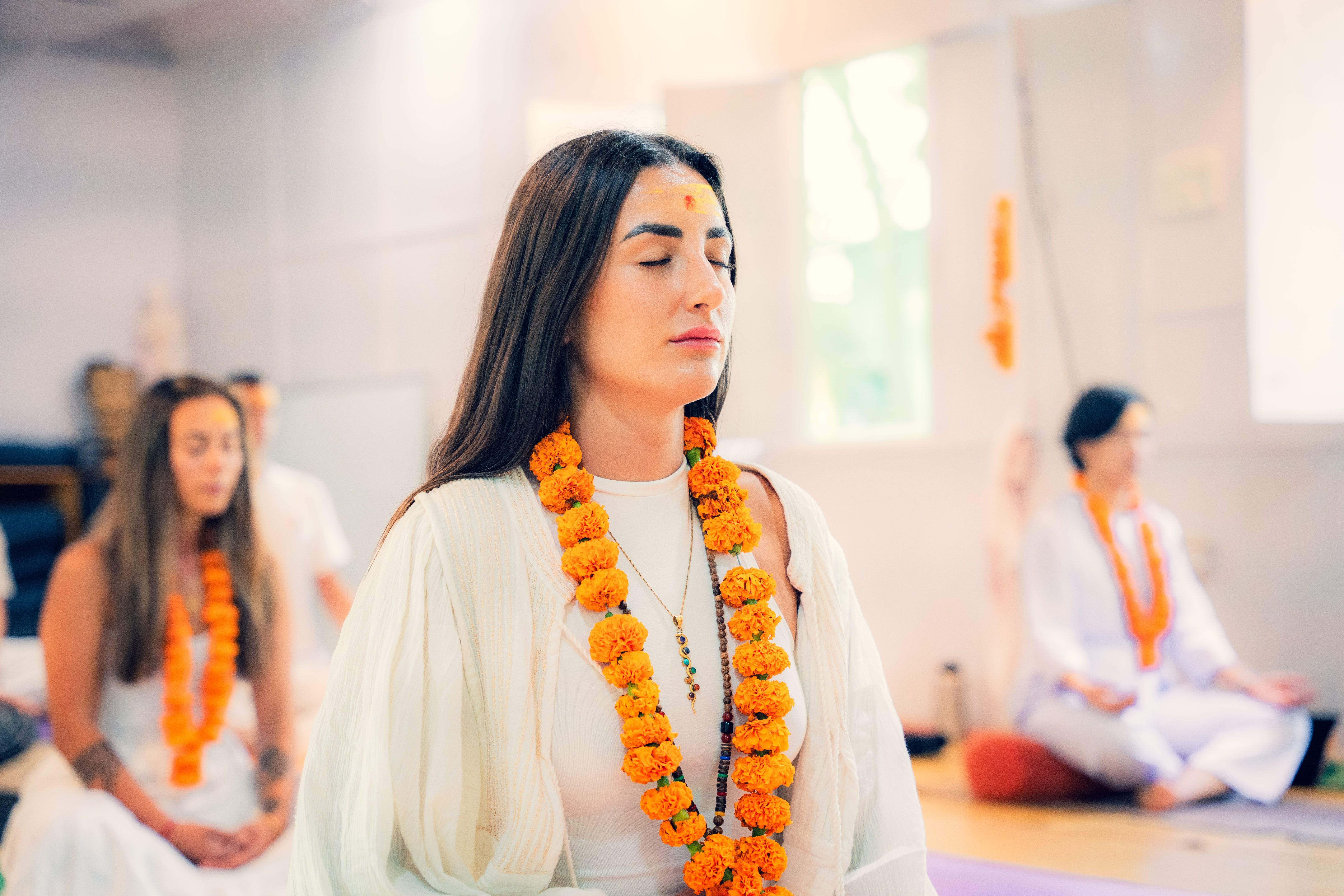
Meditation instructions across traditions specify posture in unusual detail. The insistence looks like formality until the mechanics of sitting still for an extended period are considered.
An unsupported spine is the central requirement
Most instructions ask for a spine held upright without rigidity, with the natural curves preserved rather than flattened against a backrest.
An upright column can be held by skeletal alignment with relatively little muscular effort. A slumped position transfers load to soft tissue, which fatigues and produces pain.
Because the aim is to sit for a long period without adjusting, the difference between bone-supported and muscle-supported posture becomes significant within twenty minutes.
Posture regulates breathing directly
A collapsed chest restricts the diaphragm, shortening the breath and encouraging shallow upper-chest breathing.
Since many methods use the breath as the object of attention, an unnecessarily restricted breath makes the object itself unstable and harder to follow.
An open front and released abdomen allow fuller movement, which is why instructions often mention the position of the chest and belly explicitly.
The position balances alertness against relaxation
Lying down invites sleep, and traditional instructions treat drowsiness as one of the main obstacles to practice rather than a harmless side effect.
Sitting upright keeps enough postural tone active to maintain wakefulness while removing the effort of standing or moving.
Details such as eye position, hand placement and chin angle mostly serve this balance, giving small adjustments for a practitioner who is either dull or agitated.
Stillness makes the mind's activity visible
When the body stops moving, small impulses to shift, scratch and rearrange become noticeable, and observing them is part of what several methods train.
Restlessness that goes unnoticed during ordinary activity is exposed by a still posture, which turns the body into an instrument for reading attention.
This is why teachers usually ask practitioners to notice an urge before acting on it, rather than forbidding movement outright.
The classical forms are not the only workable ones
Cross-legged sitting suits bodies accustomed to it from childhood and can be uncomfortable or unsafe for others, particularly at the knees and hips.
Chairs, benches and cushions of varying heights all allow an upright unsupported spine, which is the functional requirement rather than the leg arrangement.
Anyone with a back, hip or knee condition should adapt the position with appropriate professional advice rather than enduring pain in pursuit of a traditional shape.